
MEDIA RELEASE
DATE: 9 October 2025
Robe Left Shortchanged: Regional Councils Deserve Fair Funding
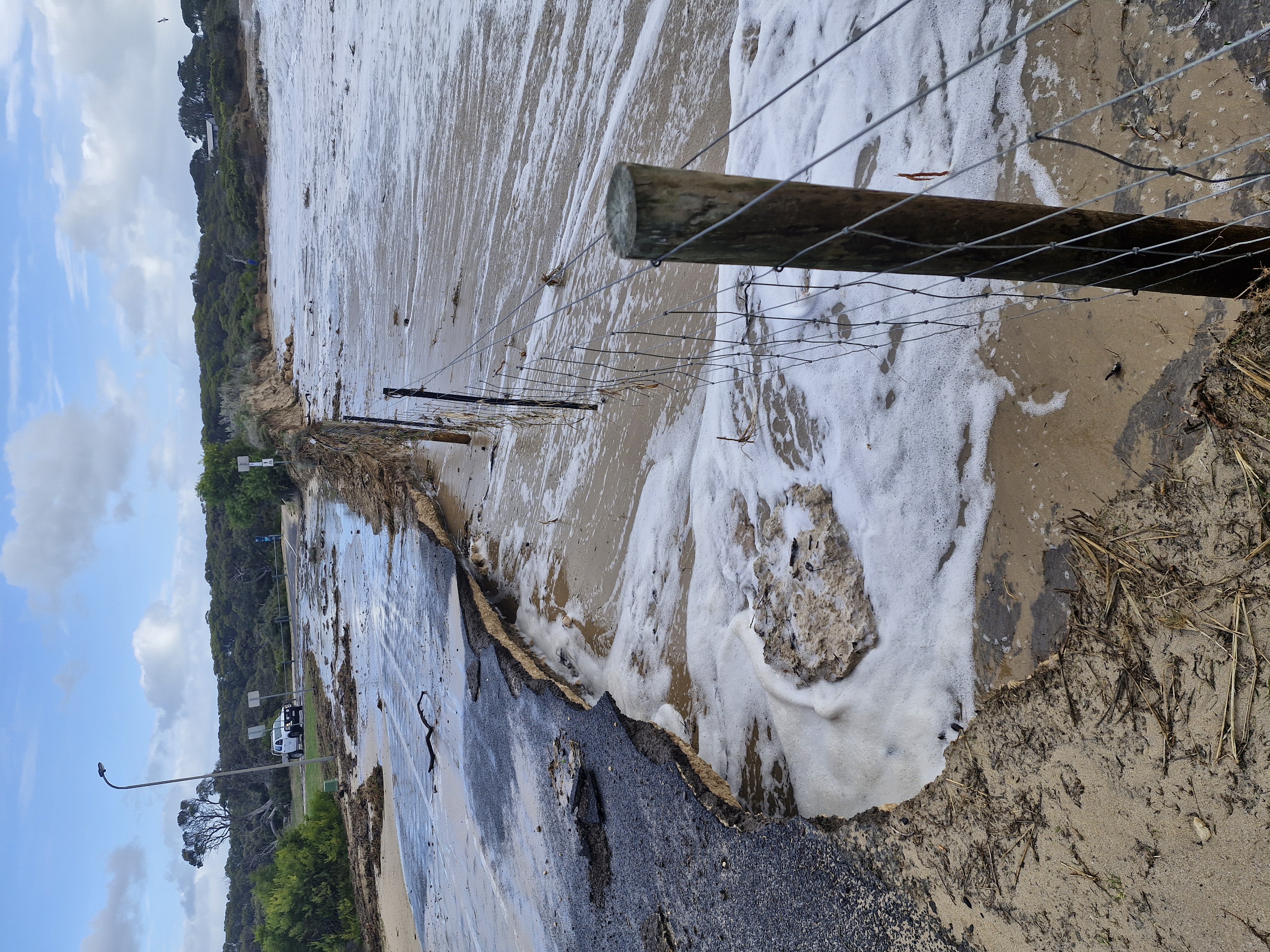
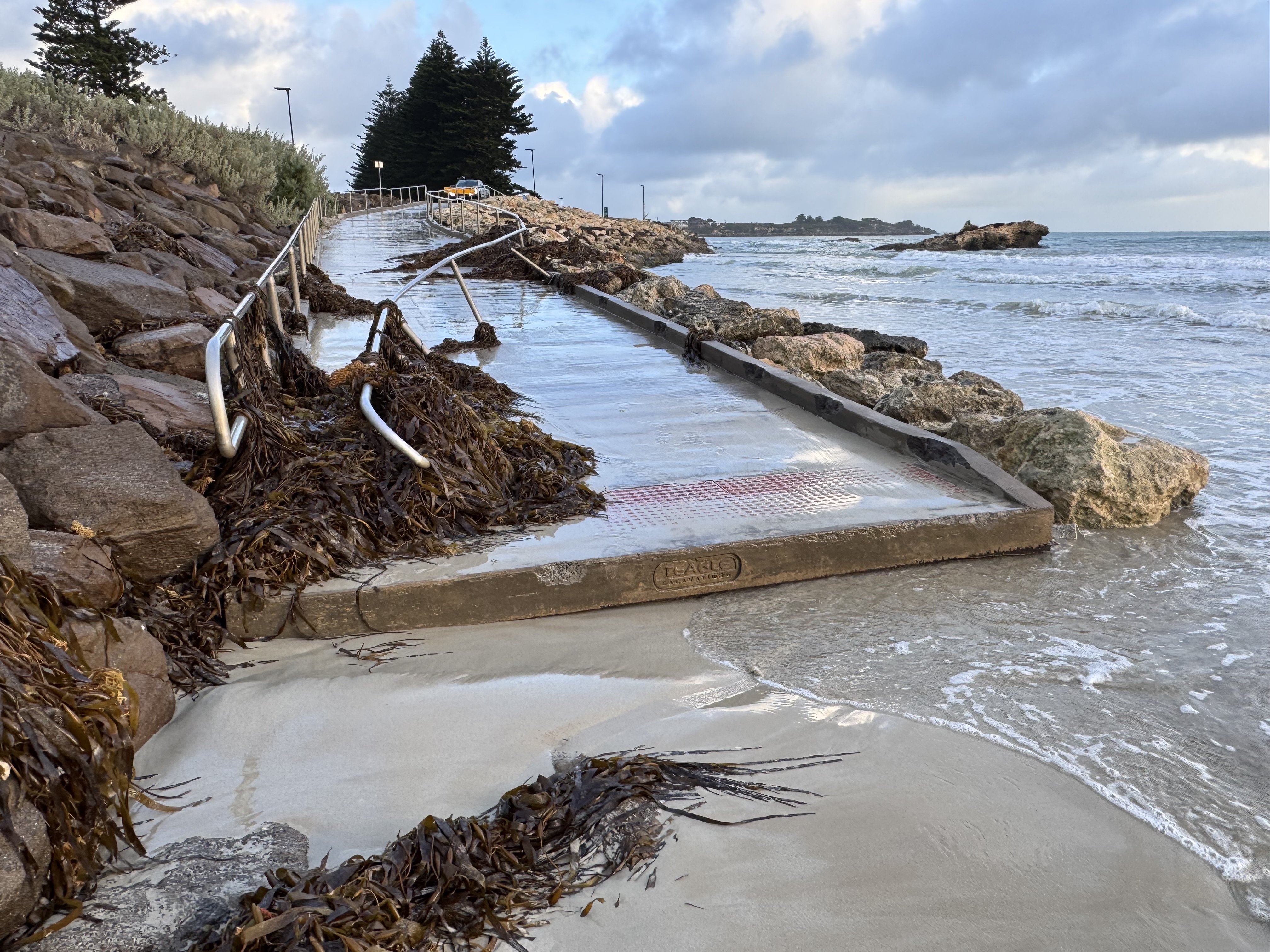
Figure 1 (left): Coastal erosion, threatening Council infrastructure
Figure 2 (right): Unprecedented storm damage - Town Beach Walkway closed
The District Council of Robe has called on the Federal Government to urgently review Australia’s Financial Assistance Grant formula, after allocations for 2025–26 confirmed Robe will again receive the lowest possible funding in the state — just $42,321 in general purpose funding, or $26.27 per resident.
Mayor Lisa Ruffell said the inequity places Robe in the same category as large metropolitan councils, despite carrying the costs of being one of South Australia’s most iconic visitor destinations.
“We are servicing up to 20,000 people at peak times on the rates of just 1,600 permanent residents. Tourism brings huge benefits, but it also comes at a cost in extra waste, road wear, and public amenities that our small community must fund. The rise of Airbnbs has shrunk our housing stock, making it harder to attract staff, while the census undercounts our real population by capturing residents away in August and non-resident ratepayers in other council areas. On paper we look wealthy, but the reality is very different — and $26.27 a head just doesn’t cut it,” Mayor Ruffell said.
Other small regional councils in the same band receive ten to forty times more support per resident. For example, Kimba receives $1,182 per capita ($1.1 million total), Orroroo Carrieton $1,320 per capita ($1.17 million total), and Wudinna $1,333 per capita ($1.55 million total). Even councils with fewer residents but larger road networks are supported far more generously. Robe, by contrast, remains locked at the absolute minimum.
This is not a localised issue, but a systemic one affecting the sustainability of regional South Australia. However, Robe stands in stark contrast to all other regional councils in terms of the amount of Financial Assistance Grant funding it receives — just $26.27 per resident, compared with hundreds or even thousands of dollars per capita elsewhere.
The Grants Commission assesses Robe as having relatively strong revenue-raising capacity due to high property valuations and its tourism economy. This creates a perception of “paper wealth” that does not reflect reality. In practice, Robe has a tiny permanent population of around 1,600 residents who carry the cost of infrastructure and services used by up to 20,000 visitors during peak periods. Council estimates that the preparation, management, compliance and cleaning required to service visitors costs around $100,000 per annum.
The inequity is further compounded by the way the census measures population. Conducted in August, it undercounts Robe in two ways:
- Many permanent residents are away in northern Australia during winter.
- Non-resident ratepayers — who rely heavily on Robe’s infrastructure and services — are counted in their “usual place of residence,” often in councils that already receive higher per-capita funding or are financially stronger.
The result is that Robe’s population is understated, while other councils’ populations are inflated, distorting the funding formula and reducing the grants allocated to small regional councils like Robe.
At the same time, the Essential Services Commission of South Australia (ESCOSA) has found Robe to be potentially financially unsustainable. Despite prudent management, ESCOSA has identified that Robe is highly vulnerable to external shocks and has limited capacity to raise revenue without placing an unreasonable burden on ratepayers.
Climate change amplifies that vulnerability, with Robe anecdotally recognised as having South Australia’s fastest-eroding coastline. Protecting and maintaining this fragile coastline, including dredging and sand nourishment, imposes ongoing and growing costs that the current funding model does not account for.
Robe also carries significant heritage responsibilities, with 30 state-listed and 50 locally listed heritage sites. These sites enrich the district’s identity and are a strong drawcard for visitors, but they bring additional costs — not only for upkeep and protection, but also for planning, development control, and compliance. This adds yet another layer of responsibility to a small council already stretched by unique service obligations and a very small ratepayer base.
The impact is real:
- Robe is the only council in SA that owns and operates a marina, with complex compliance and financial obligations.
- Council runs a fully accredited Visitor Information Centre and public library and provides a childcare service, filling critical service gaps for the wider region.
- Seasonal visitor peaks accelerate wear and tear on roads like Nora Creina Road and Long Beach, yet the Local Road Grant allocation is just $157,696 — far below comparable councils.
- Recruitment is a growing crisis, with repeated but unsuccessful campaigns for plant operators due to housing shortages and lower wages compared with larger centres.
Chief Executive Officer Natalie Traeger said these issues highlight the urgent need for reform.
“ESCOSA has already warned that Robe is potentially financially unsustainable, yet we are trapped at the minimum grant. The current formula fails to recognise the costs of tourism, the distortions caused by the census, our heritage responsibilities, the escalating costs of climate change, or the vulnerabilities of small councils with unique obligations. It’s a structural inequity that sets rural councils up to fail,” Ms Traeger said.
The District Council of Robe will be seeking urgent support from State and Federal Government Ministers, as well as other local government stakeholders, to demand a fairer funding model that reflects the challenges of regional councils with high visitor numbers, heritage responsibilities, and climate change pressures.
- ENDS -
Contact:
Nat Traeger
Chief Executive Officer | District Council of Robe
0429 799 526